

How to Become a Game Master: Where to Start

Azaphyr
DM & Creative Workshop Master
July 24, 2026
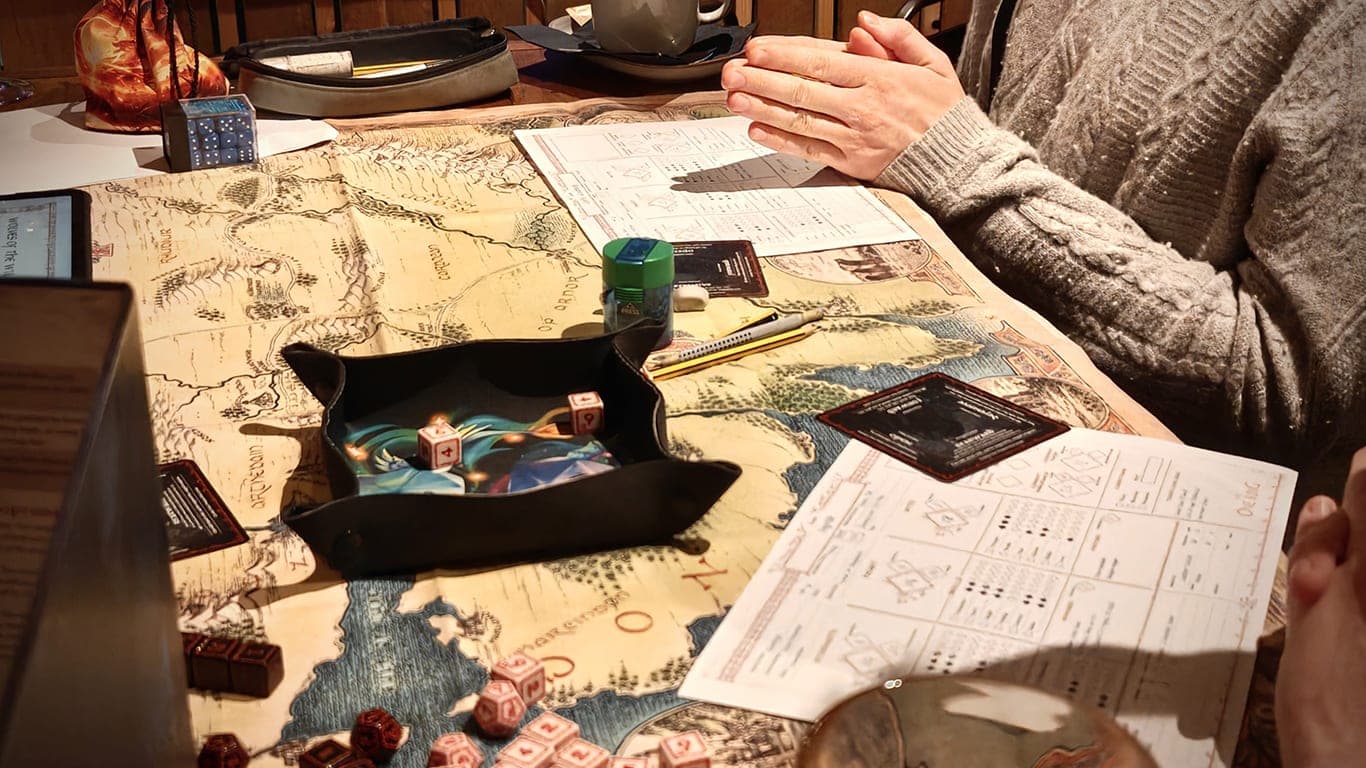
Becoming a game master often looks like a job for a chosen few: you would need to know the rules by heart, improvise like an actor, and prepare plots worthy of a TV series. The reality is far simpler, and far more encouraging. You learn how to become a game master by actually running games, exactly the way you learn to cook by cooking. A three-hour one-shot, a published scenario, three or four friendly players: that is everything your first session requires. If you are wondering where to start, the honest answer fits in one sentence: pick a date, pick a short scenario, and run it. This article walks you through the concrete first steps, then shows how the roleplaying community in Brussels can back you up.
Why become a game master (and why the scene needs you)
Let us start with a truth rarely said out loud: the Brussels roleplaying scene is permanently short of GMs. Players are plentiful, curious, and motivated. What limits the number of tables every single week is the number of people willing to sit at the head of the table and tell the story. Every new GM, even a nervous beginner, literally opens up seats that did not exist the day before.
The other piece of good news is that players are far more forgiving than you fear. Nobody shows up at a table to grade your performance. People come to have a good evening, laugh, attempt absurd plans, and see what happens. A GM who hesitates over a rule, checks their notes, or improvises a wobbly voice ruins nothing at all: they are doing exactly what every GM does, including the veterans. The difference between a beginner GM and an experienced one is not talent, it is simply the number of sessions they have run.
You become a game master by running games
You will not become a GM by reading a third rulebook or watching yet another advice video. You will become one by running a session, then another. The goal of this section is to shrink that first session down to its simplest possible form, so nothing stands between you and actually playing it.
Choose a one-shot, not a campaign
A campaign demands regularity, continuity, and months of plot management. A one-shot plays out in a single three-to-four-hour session: a beginning, a middle, an end, and everyone goes home happy. It is the ideal beginner format because the stakes are tiny. If the session is mediocre, it is over that same evening and the next one starts from a clean slate. If it goes well, you will want to run another one the very next day. A typical table is one GM plus three to six players: with three motivated friends, you already have everything you need.
Lean on a published scenario
Writing your own scenario is a pleasure that will come later. For your first session, take a published one designed for beginners: most major games offer starter boxes or short adventures with pregenerated characters, scenes already broken down, and the essential rules summarised. A good published scenario does the heavy lifting for you: it tells you who the important characters are, what happens if the players do this or that, and how to wrap things up. Your job is to read it twice, highlight the key moments, and bring it to life at your table. That is more than enough, and it is how most GMs started.
Session zero: the ten minutes that change everything
Before the opening scene, take ten minutes to set expectations. Explain the tone of the scenario (investigation, horror, light adventure), ask what everyone wants out of the evening, and agree together on what stays off the table. State the basic social contract too: we play as a team, we let each other speak, and the GM may make a quick ruling so the game keeps moving. This mini session zero defuses nearly every problem a beginner GM dreads. A table that knows what to expect is a relaxed table.
Prepare less, play better
The classic beginner trap is over-preparation: twenty pages of notes, hours of work, and panic the moment players wander off the expected path. Prep-light techniques are more effective and far less stressful.
Three lists beat a novel
For a one-shot, prepare three things: a list of places (five or six, each with one sensory detail), a list of characters (a name, a desire, a way of speaking), and a list of problems (what happens if nobody intervenes). With those three lists you can answer almost any player initiative, because you are not preparing a fixed story: you are preparing a situation, and the story emerges from contact with the players. When they do something unexpected, and they will, simply ask yourself: which place, which character, which problem does this action touch?
Manage the spotlight and the clock
Two skills make an enormous difference from the very first session, and both can be practised deliberately. First: keep the spotlight moving. If a quiet player has not spoken in ten minutes, turn to them and ask: "And you, what are you doing meanwhile?". It is the single most powerful sentence in the GM toolkit. Second: watch the clock. Over a three-to-four-hour session, aim to be halfway through the scenario at the halfway mark. If you are running late, cut a middle scene and head for the finale: nobody will notice the missing scene, and everyone will remember an ending played at full strength rather than one rushed through in ten minutes.
How to become a GM in Brussels with Tales of Bruss'Hell
Starting alone in your living room is fine. Starting surrounded by a community is better. Tales of Bruss'Hell is a Brussels non-profit (ASBL) that runs a game night every weekend at a rotating partner venue across Brussels: bars, bookshops, a different atmosphere each time. Most nights are free; some venues charge around 5 euros per seat to cover the room. Tables run in both French and English, and the format is exactly the one described above: one GM, three to six players, three to four hours of play. Coming along first as a player, via our calendar of upcoming events, is also an excellent way to watch other GMs at work before stepping behind the screen yourself.
For those ready to take the leap, the association has built a real support program: insurance covering the activities, reimbursement of expenses, and a GM community where people swap scenarios, war stories, and advice between sessions. Best of all, the table-pitch system leaves you in control: you propose the table you want to run, when you feel ready, at your own pace. One one-shot every couple of months or a table every weekend, the choice is yours. If the itch is there, become a game master with Tales of Bruss'Hell: the Brussels scene genuinely needs you.
And if you are brand new to this hobby, start with our guide to tabletop RPGs in Brussels to see how a game night works, then pick your first one-shot. Three hours of play from now, you will no longer be wondering how to become a game master: you will be one.
Related Posts

Become a DM
Apr 28, 2025