
What Is a Tabletop RPG, Exactly?
Azaphyr
DM & Creative Workshop Master
July 24, 2026
What is a tabletop RPG, exactly? If you have heard friends talk about Dungeons & Dragons, seen a game-night poster in a bar, or come across the weekly game nights that Tales of Bruss’Hell runs in Brussels, you may well have asked yourself the question. The answer fits in one sentence: a tabletop role-playing game is a game where a group of friends tells a story together, each playing a character, with a few dice to settle the uncertain moments.
No screen, no mandatory board, no winners or losers: just a table, voices, imagination and a lot of laughter. Here is how it works in practice.
What is a tabletop RPG? A simple definition
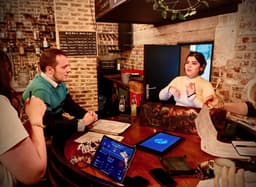
A tabletop RPG is a structured conversation. One person, the game master, describes a world and a situation: "You arrive at the gates of a ruined city, rain is falling, a light glows in the distance." The other participants, the players, respond by describing what their character does: approach the light, climb the wall, call out loud. The game master then narrates the consequences, and the story moves forward, one decision at a time.
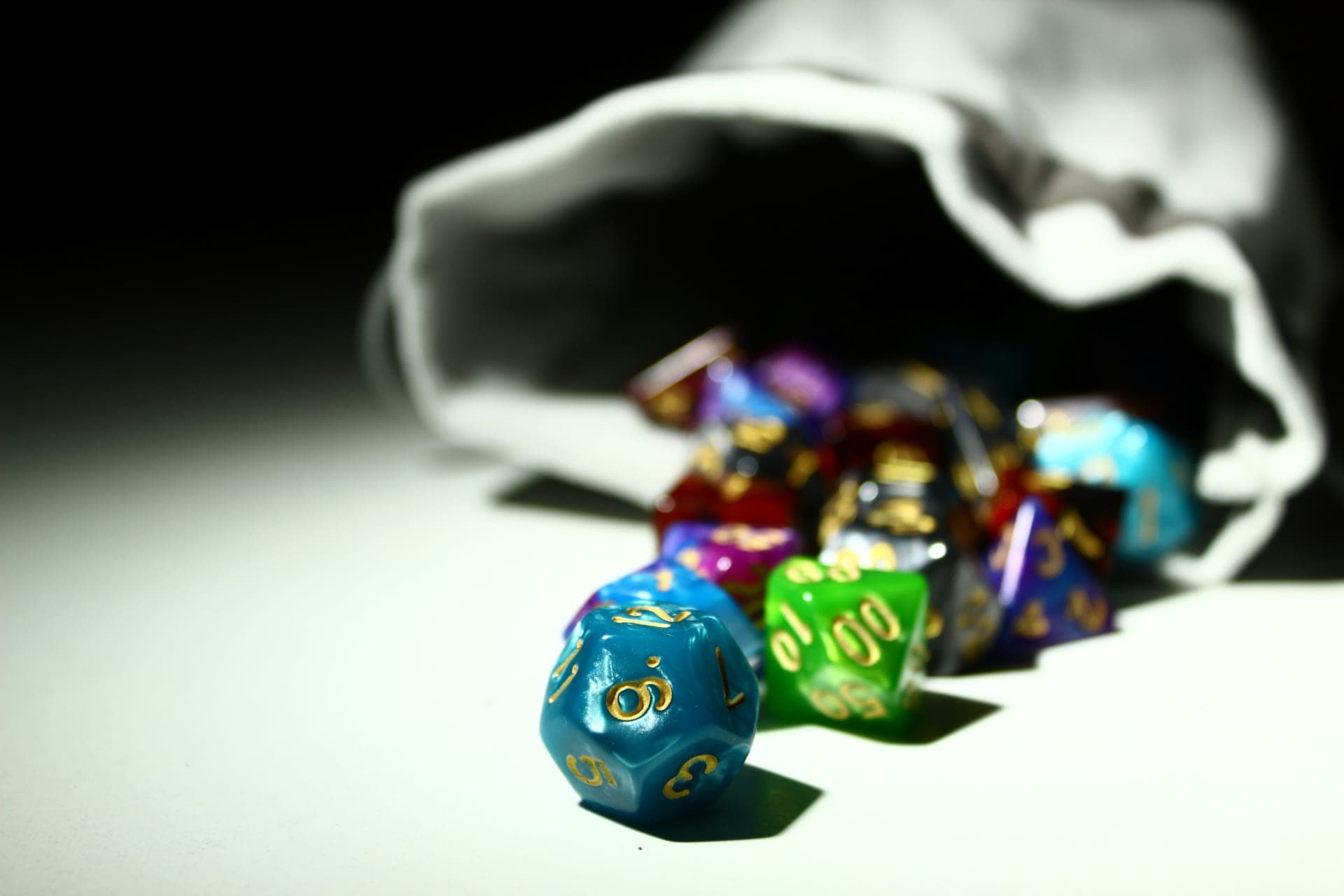
Dice come into play when the outcome of an action is uncertain. Convincing a suspicious guard, leaping across a chasm, deciphering an ancient tome: you roll a die, add your character's skills, and the result decides whether the action succeeds or fails. That blend of free narration and chance is what makes every session unique: nobody, not even the game master, knows exactly how the story will end.
A tabletop RPG is neither a video game nor improv theatre, even though it shares genes with both. Unlike a video game, no line of code limits your choices: if you can describe it, you can attempt it. Unlike theatre, there is no audience: everything is played out between the people sitting around the table, for their enjoyment alone. And unlike live-action role-playing, there are no costumes: everything happens through words, which makes it a hobby that can set up anywhere, from a Brussels living room to the back room of a bar or a bookshop.
What is a tabletop RPG session actually like?
A typical session gathers one game master and three to six players around a table for three to four hours. Each player has a character sheet: a document summarising who their hero is, what they can do and what they carry. At an introduction session, like the ones Tales of Bruss’Hell organises in Brussels, those sheets come pre-filled and the dice are provided: you pick a character and you play, with zero preparation.
The evening follows the thread of a scenario: a mystery to solve, a dungeon to explore, a secret to uncover. The game master knows the outline, but the players' choices decide the path. Two tables playing the same scenario will live two different stories: that is the magic of the format.
And it needs saying clearly, because it is the number one worry of beginners: nobody asks you to act. Describing your actions in the third person ("my character hides behind the barrel") is a perfectly normal way to play. The tone depends on the table: some sessions feel like an adventure film, others like a comedy among friends.
The game master and the players: who does what?
The game master (often shortened to GM) is at once narrator, referee and performer of every character the heroes meet: the chatty innkeeper, the suspicious queen, the dragon at the back of the cave. They prepare the scenario, describe the scenes and apply the rules. It is a demanding, creative role that many players end up trying after a few sessions.
The players each have just one character to embody, but complete freedom in bringing them to life. Tabletop role-playing is a deeply cooperative hobby: players do not compete against each other, they face the story's obstacles together. The best sessions are the ones where everyone builds on each other's ideas and the group's improvised plan goes memorably off the rails.
The games people play most: D&D 5e and beyond
Dungeons & Dragons 5th edition is the most played tabletop RPG in the world today, and it is also the most common game at Brussels tables: heroic fantasy, accessible and spectacular. But the hobby is much wider. Call of Cthulhu offers horror investigation in the roaring twenties; Pathfinder a more tactical, detailed brand of fantasy; and a crowd of indie and narrative games explore every genre imaginable, often with rules that fit on a few pages.
Our advice for a first contact: do not choose a system, choose a story that appeals to you. At Tales of Bruss’Hell game nights, every table shows its game, its language and its level at booking; the scenario's pitch will tell you more than any comparison of rulebooks.
How to start playing tabletop RPGs
The best way to start playing tabletop RPGs is simply to play: one introduction session will teach you more than a week of videos and articles. Look for a table flagged as beginner-friendly, with a game master used to welcoming newcomers, and let yourself be carried along. There is no need to buy books, dice or gear for a first session: at introduction tables, everything is provided.
If you live in the capital, it is even simpler: browse our upcoming game nights and book a seat at a beginner table, in French or in English. The non-profit Tales of Bruss’Hell runs a game night every weekend at a different partner venue in Brussels, most of the time for free (some venues ask around 5 euros to cover the room, always shown at booking). For a complete walkthrough of your first session, read our guide Getting Started with Tabletop RPGs in Brussels.
Playing tabletop RPGs in Brussels
Tabletop role-playing is thriving in Brussels. Beyond the weekly game nights of Tales of Bruss’Hell, the city has active clubs such as Les Saigneurs du Chaos in Anderlecht, Les Portes de Salem in Berchem-Sainte-Agathe and La Ligue des Jeuxsticiers around Woluwe and Auderghem, not to mention the D&D Belgium network. Introductory sessions are also offered by the BRASS cultural centre in Forest and by Brussels libraries, and the Brussels Games Festival celebrates games in all their forms every year. If you are curious about gear, the shops Dédale/Ludotrotter and Outpost Brussels in Saint-Josse are worth a visit.
You now know what a tabletop RPG is: a shared story, a few dice, and evenings you will still be talking about weeks later. To explore the local scene in detail, our guide to tabletop RPGs in Brussels covers everything worth knowing. The logical next step? A chair at a table, some weekend soon, somewhere in Brussels.